What’s a Fuel Filter? A Mechanic’s Guide to Your Engine’s Silent Protector
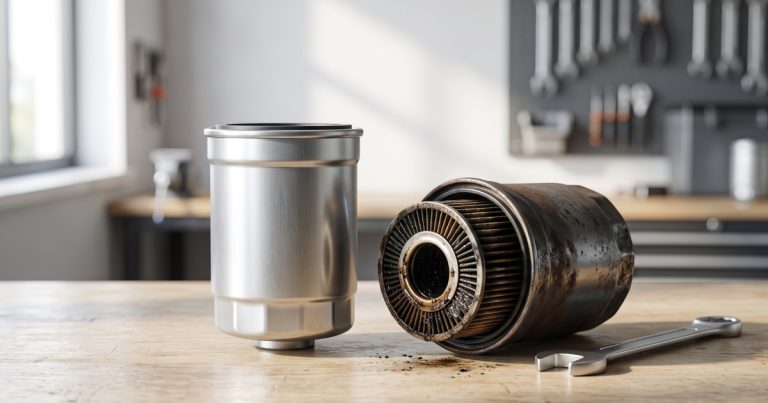
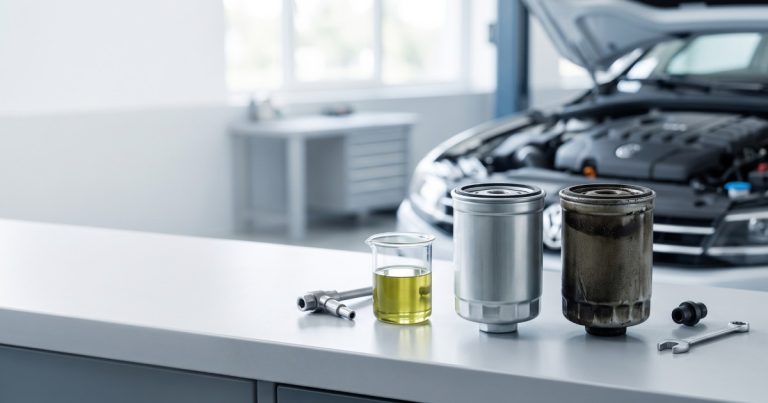
The first time I pulled a clogged fuel filter out of a customer’s truck, it looked less like an engine part and more like something you’d find at the bottom of a coffee pot — caked in rust flakes, varnish, and grit. That truck had been stalling at highway speeds for weeks, and three different shops couldn’t figure out why. The fix cost $40 in parts.
That’s the thing about a fuel filter: it’s cheap, it’s small, and it’s almost always overlooked — until it strands you.
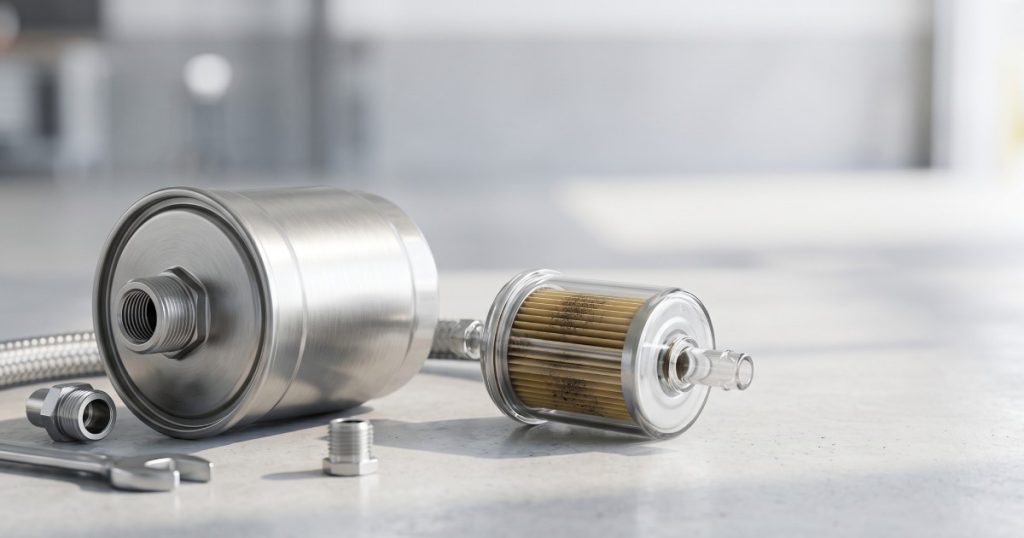
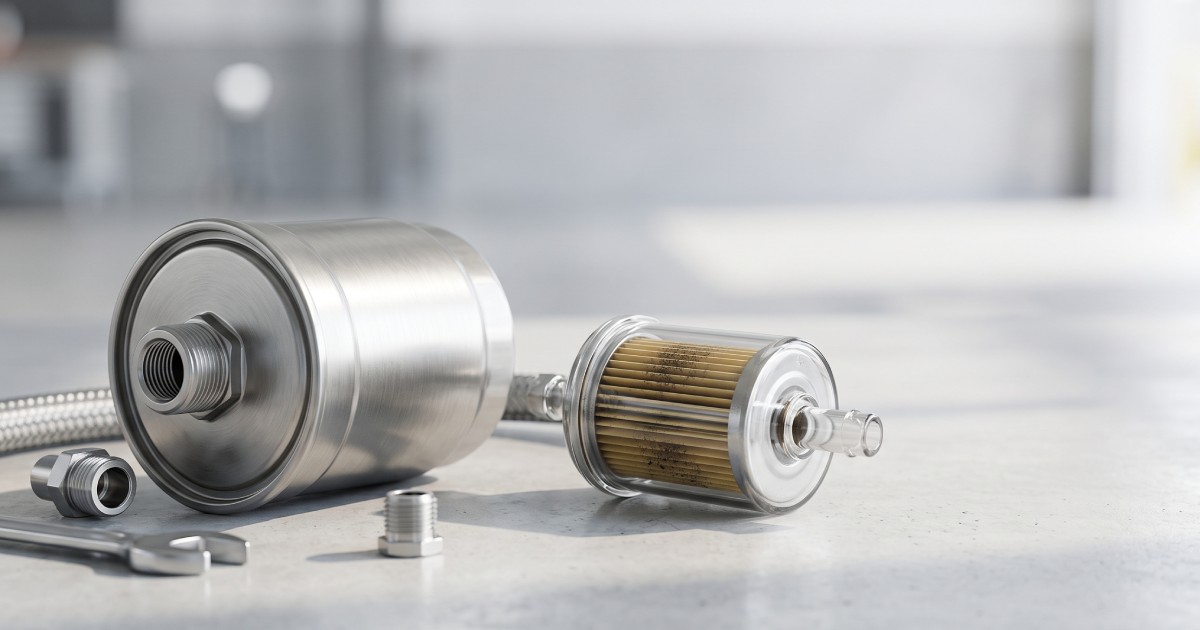
So what’s a fuel filter, exactly? In simple terms, it’s a small canister or cartridge sitting somewhere along your fuel line whose only job is to strain contaminants out of the gasoline or diesel before it reaches your engine. No moving parts, no sensors, no glamour — just a mesh or paper element quietly doing the unglamorous work of keeping your fuel system alive.
This guide breaks down exactly what it does, why it matters more than most drivers realize, and how to know when yours needs attention.
What Is the Main Job of the Fuel Filter?
What is the main job of the fuel filter? It’s straightforward: remove dirt, rust particles, dust, and other debris from fuel before that fuel reaches your engine’s sensitive components.
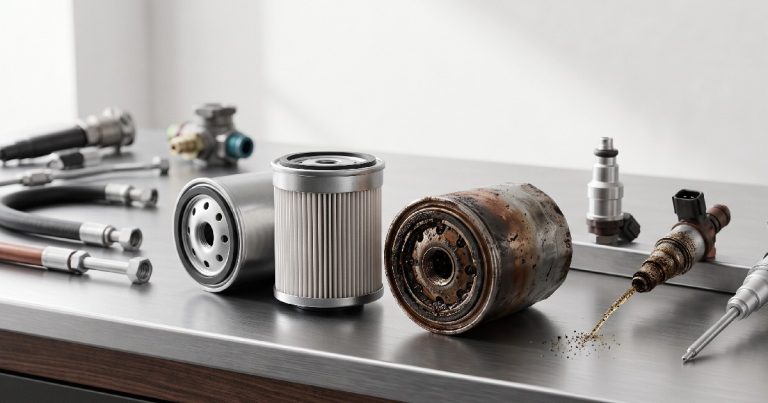
Think of it as a bouncer standing between your gas tank and your fuel injectors. Modern fuel injectors have openings measured in microns — often smaller than a human hair. A single piece of grit that slips past the filter can score an injector’s internals or clog its tiny nozzle outright.
Here’s what the filter is actually screening out:
- Rust and scale that flakes off the inside of steel fuel tanks over time
- Dirt and sediment introduced during fueling at the pump
- Water condensation that can form inside the tank (especially in humid climates or with infrequent driving)
- Varnish and gum deposits that form as gasoline ages and breaks down chemically
Without that filtration, all of that debris would travel straight into your fuel pump, injectors, and combustion chambers — parts that are far more expensive to replace than a filter ever will be.
What Fuel Filter Do You Have? (It Depends on Your Vehicle)
Not all filters are created equal, and the honest answer to “what fuel filter” your car uses depends on the make, model, and fuel type. Here’s the breakdown I give customers at the counter:
1. Inline Fuel Filters
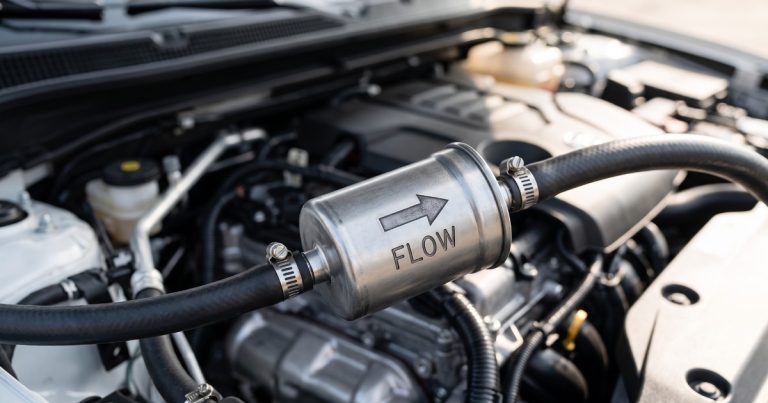
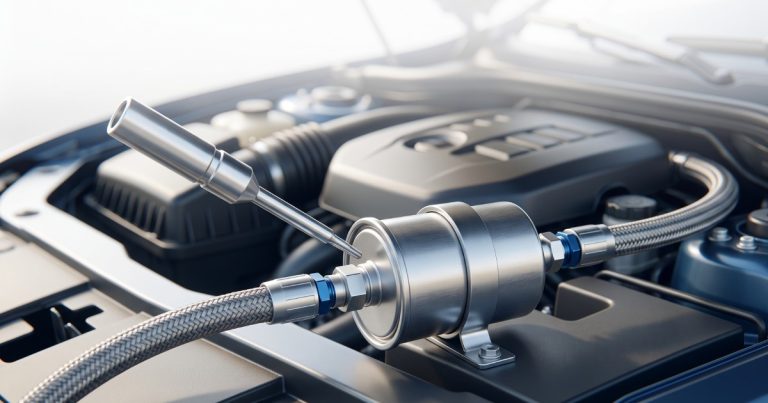
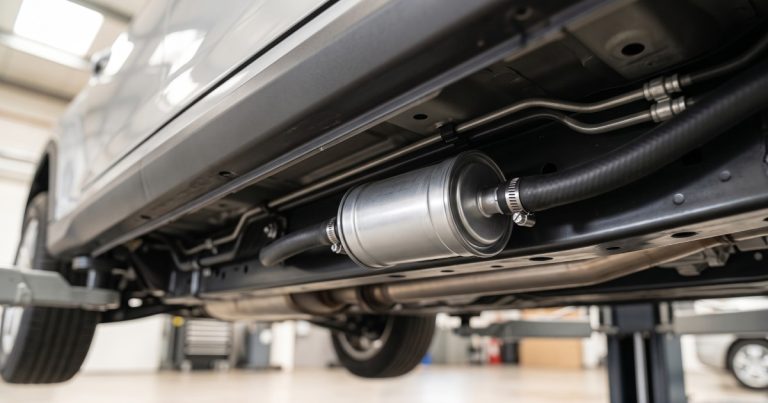
Mounted along the fuel line, usually under the car or near the engine bay. Common on older carbureted vehicles and some fuel-injected models. These are the easiest for DIYers to access and replace.
2. In-Tank Fuel Filters
Built into the fuel pump assembly, submerged inside the gas tank. Most modern fuel-injected vehicles (roughly post-1990s) use this style. They’re designed to last the life of the pump but require dropping the tank or accessing it through a service panel to replace.
3. Diesel Fuel Filters
Diesel systems are pickier. Diesel fuel filters often include a water separator, since water is far more damaging to diesel injection systems than gasoline systems. Many diesel filters also have a priming pump or bleed screw to remove air after replacement.
4. Carbureted vs. Fuel-Injected Filter Differences
Carbureted engines can tolerate slightly larger particles, so their filters use a coarser mesh. Fuel-injected engines, especially direct-injection systems, need much finer filtration because of tighter injector tolerances — this is why you can’t always swap filter types across engine generations.
Quick tip: Always check your owner’s manual or a parts-lookup tool (RockAuto, AutoZone’s site, or your dealer) by VIN. Fuel filter part numbers are not universal, even across the same model year with different engine options.
Why Your Fuel Filter Matters More Than You Think
It’s easy to dismiss a fuel filter as a minor consumable, but I’ve seen what happens when one gets ignored.
It Protects Expensive Components
A fuel injector replacement can run $150–$600 per injector depending on the vehicle. A fuel pump replacement often costs $400–$900 with labor. A $15–$60 filter is the cheapest insurance policy your fuel system has.
It Affects Fuel Economy
A partially clogged filter restricts fuel flow, which can cause the engine to run lean under load. Over time, that translates to reduced mileage and rougher throttle response — something I’ve measured firsthand on dyno pulls with customer vehicles before and after a filter swap.
It Impacts Engine Performance
Reduced fuel pressure from a clogging filter shows up as hesitation, power loss under acceleration, and inconsistent idle. Drivers often blame the spark plugs or the throttle body first, when the real culprit is fuel starvation.
Signs Your Fuel Filter Is Going Bad
Based on years of diagnosing “mystery” drivability issues, these are the symptoms that consistently trace back to a failing fuel filter:
- Engine sputters or stalls at highway speed — the classic symptom, caused by fuel starvation under high demand
- Difficulty starting the car — a clogged filter can starve the engine during the initial crank
- Rough idle — inconsistent fuel delivery causes an uneven idle
- Random misfires or hesitation under acceleration
- Reduced fuel economy with no other obvious cause
- Fuel pump running louder than normal — the pump works harder to push fuel through a restricted filter, which can shorten its lifespan too
If you’re noticing two or more of these together, especially the stalling-under-load pattern, the fuel filter should be near the top of your diagnostic checklist — right alongside spark plugs and the mass airflow sensor.
How Often Should You Replace a Fuel Filter?
This varies more than most people expect:
| Filter Type | Typical Replacement Interval |
|---|---|
| Inline (accessible) | Every 20,000–40,000 miles |
| In-tank (with pump) | 60,000–100,000 miles, or with pump replacement |
| Diesel filter | Every 10,000–20,000 miles (more frequent due to water separation) |
Always defer to your owner’s manual first — these are general industry ranges, not universal rules. Vehicles driven mostly in dusty or rural conditions, or those regularly fueled at older/less-maintained gas stations, tend to need more frequent replacement.
DIY Fuel Filter Replacement: What to Know Before You Start
If you’re comfortable with basic wrenching, replacing an accessible inline fuel filter is a manageable weekend job. A few things I always tell first-timers:
Safety first:
- Relieve the fuel system pressure before disconnecting any line (usually via the fuel pump relay/fuse — pull it, start the car, let it die, then work on the system)
- Work away from open flames or sparks — fuel vapor is highly flammable
- Have a rag and a small catch container ready; some fuel will spill even after depressurizing
Basic checklist:
- Locate the filter (check a service manual or online diagram for your specific model)
- Relieve fuel pressure
- Disconnect fuel lines (note the flow direction arrow on the filter housing)
- Remove the old filter from its mounting bracket
- Install the new filter, matching the flow direction
- Reconnect lines and secure the bracket
- Restore power, cycle the ignition a few times to rebuild pressure, then check for leaks before driving
When to leave it to a professional: If your filter is inside the gas tank (integrated with the fuel pump module), this is a bigger job involving dropping the tank or accessing it from inside the vehicle. Unless you’re experienced, this is worth paying a shop for.
Buyer’s Checklist: Choosing a Replacement Fuel Filter
- ✅ Confirm the exact part number by VIN, not just make/model/year
- ✅ Match OEM specifications for micron rating, especially on direct-injection engines
- ✅ Check flow direction markings before purchase (some are direction-specific)
- ✅ For diesel vehicles, confirm whether a water separator is integrated or separate
- ✅ Don’t default to the cheapest option — a poorly filtered aftermarket unit can let contaminants through that damage injectors down the line
Key Takeaways
A fuel filter is a small, inexpensive part with an outsized job: keeping contaminants out of your fuel system so your injectors, pump, and engine stay healthy. Ignoring it doesn’t just risk a stall on the highway — it can quietly wear down components that cost far more to replace than the filter itself.
If your car has been sputtering, hesitating, or losing power under load, don’t overlook this cheap, easy-to-check part. A fresh filter is one of the most cost-effective maintenance jobs you can do — and one of the easiest to put off until it’s too late.
FAQ: Fuel Filter Questions Answered
1. What’s a fuel filter, in the simplest terms? It’s a small filtration device in your fuel line that removes dirt, rust, and debris from gasoline or diesel before it reaches your engine.
2. What is the main job of the fuel filter? To protect fuel injectors, the fuel pump, and the engine from contaminants that would otherwise cause clogging, wear, or damage.
3. Can I drive with a clogged fuel filter? You can for a while, but performance will degrade — expect stalling, poor acceleration, and reduced fuel economy. Eventually, a severely clogged filter can strand you or damage the fuel pump.
4. How much does it cost to replace a fuel filter? Parts typically run $15–$60 for accessible inline filters. In-tank filters bundled with a fuel pump assembly can run $200–$500 including labor, since the tank often needs to be dropped.
5. Does every car have a replaceable fuel filter? Most do, but some newer vehicles use a “lifetime” in-tank filter that’s only serviced when the fuel pump itself is replaced. Check your owner’s manual to confirm.
6. Is a dirty fuel filter the same as bad fuel? No — bad or contaminated fuel is a separate issue, though a dirty filter is often the downstream evidence of it. If you consistently fuel up at low-quality stations, expect to replace your filter more often.
Final Verdict
After a decade of pulling clogged filters out of stalled-out cars, my take is simple: the fuel filter is the cheapest insurance you can buy for your engine. It doesn’t boost horsepower, it won’t show up in a walkaround inspection, and most drivers never think about it — right up until it fails and takes a fuel pump or set of injectors down with it.
If your vehicle uses an accessible inline filter, replace it on schedule and treat it as routine maintenance, not an afterthought. If yours is bundled into the fuel pump module, keep an eye on the mileage interval and budget for it alongside pump service. Either way, a $15–$60 part beats a $500–$900 repair bill every time.