Can You Clean a Fuel Filter Without Removing It?
If you’ve ever popped the hood, traced the fuel line, and asked yourself, “can you clean a fuel filter without removing it?” — you’re not alone. It’s one of the most common questions I get from DIY owners trying to save a trip to the shop, and the honest answer is: it depends on which type of filter your vehicle has.
I’ve spent over a decade working on everything from daily-driver sedans to high-mileage trucks, and I’ve seen this question trip up even experienced weekend mechanics. So let’s cut through the confusion. In this guide, I’ll walk you through exactly when in-place cleaning works, when it doesn’t, and what you should do instead if your engine is stumbling, hesitating, or losing power.
Quick Answer: It Depends on the Filter Type
Here’s the short version before we get into the details:
- In-tank fuel filters (built into the fuel pump assembly) — can sometimes be rinsed or blown out in place with limited success, but full removal gives far better results.
- Inline fuel filters (mounted along the fuel line, especially on older or diesel vehicles) — generally cannot be effectively cleaned without removal, and most manufacturers recommend replacement, not cleaning.
- Diesel fuel filters with water separators — these are designed to be drained and serviced in place, which is different from “cleaning” in the traditional sense.
Now let’s break down why.
Why This Question Matters More Than You’d Think
A clogged fuel filter isn’t just an inconvenience — it’s a symptom that can snowball into bigger problems. When fuel can’t flow freely, your fuel pump has to work harder to push gasoline or diesel through the restriction. Over time, that extra strain shortens pump life, and a failed fuel pump is a far more expensive repair than a $15–$40 filter.
I’ve seen customers try to “clean” a filter by spraying carb cleaner through it or blasting it with compressed air while it’s still mounted in the vehicle, hoping to avoid the labor of removal. Sometimes it buys a little time. More often, it just delays the inevitable — and in a few cases, it made things worse by pushing dislodged debris further into the fuel system.
How Fuel Filters Actually Work (The “Why” Behind the Cleaning Problem)
To understand why cleaning in place is so limited, you need to understand what a fuel filter actually does.
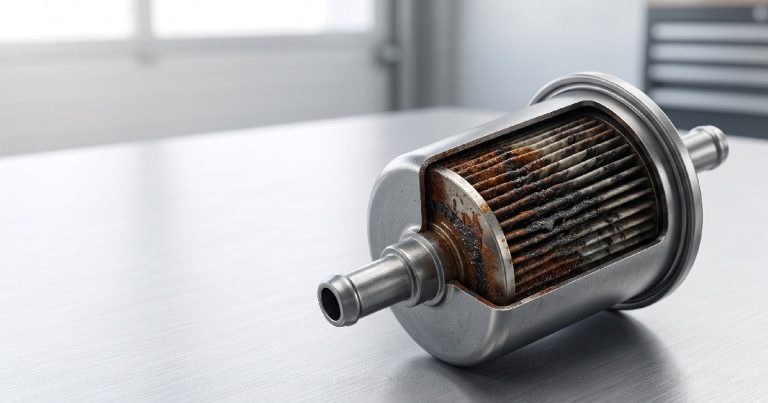
Most fuel filters use a pleated paper, synthetic fiber, or fine mesh element designed to trap particles as small as 10–20 microns — roughly a third the width of a human hair. Fuel is forced through this element under pressure, and contaminants (rust flakes, dirt, degraded fuel varnish, microbial growth in diesel) get lodged in the pleats.
The problem: those pleats are folded and layered specifically to maximize surface area in a small housing. You physically can’t get a spray nozzle or compressed air deep enough into every fold while the filter is still connected to fuel lines and mounted in its bracket. Even if you rinse the outside, the debris embedded in the internal pleats mostly stays put.
This is the core reason cleaning without removal rarely restores full flow — you’re cleaning the surface, not the structure.
In-Tank Filters: Limited In-Place Cleaning Is Possible
Many modern fuel-injected vehicles use a sock-style or mesh in-tank filter attached directly to the fuel pump module, submerged inside the gas tank.
What you can do without full removal:
- Some techs will drop the tank partially or access it through a service port, then gently backflush the sock filter with clean fuel or filtered compressed air.
- On vehicles with a fuel pump access panel (common on many sedans and crossovers built after the early 2000s), you can sometimes reach the sock filter without dropping the entire tank — though this still counts as partial disassembly, not “cleaning without removing anything.”
The catch:
- Most in-tank sock filters are cheap (often $10–$25) and are not designed to be reused. Manufacturers typically recommend replacing them whenever the fuel pump is serviced.
- Backflushing can dislodge debris temporarily, but fine sediment often re-clogs the mesh within a few thousand miles.
Bottom line: technically possible in limited cases, but not a long-term fix.
Inline Fuel Filters: Why Cleaning Rarely Works
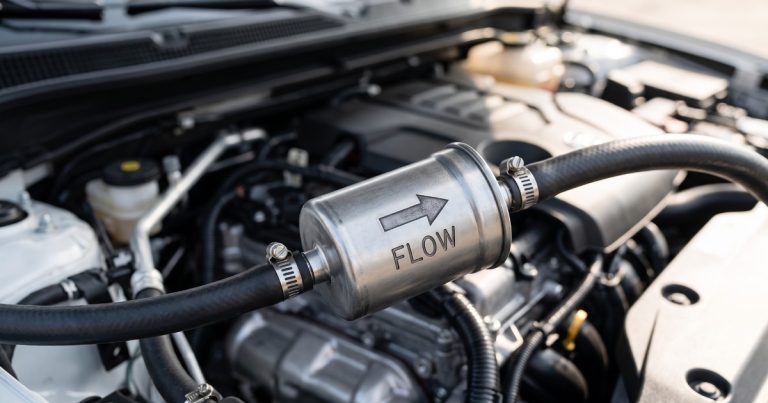
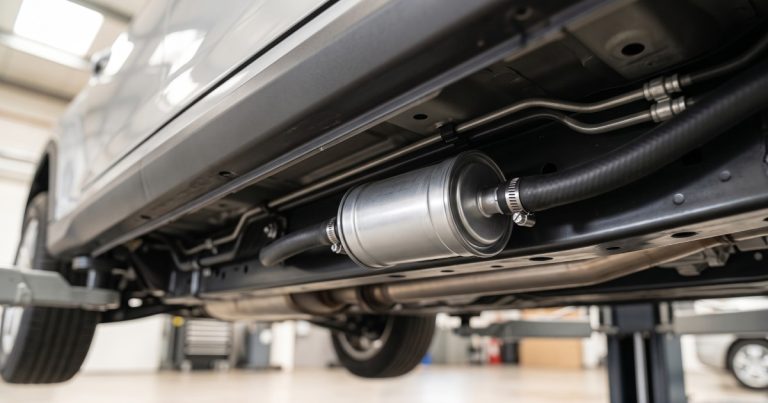
If your vehicle has an inline canister-style filter (common on older carbureted cars, some trucks, and many diesel applications), the answer leans much closer to no.
Here’s why:
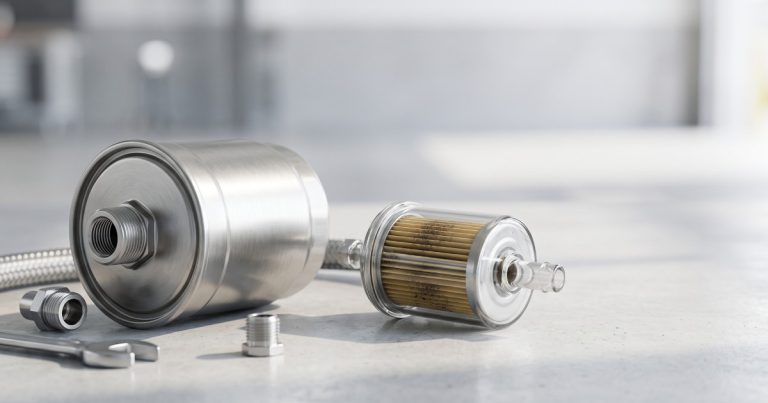
- Inline filters are sealed units. There’s no access point to clean the internal media without cutting or disassembling the housing.
- Even if you disconnect one line and spray cleaner backward through the filter (a method some forums suggest), you’re only clearing loose debris near the inlet — not restoring the filter media itself.
- Reverse-flushing can push trapped contaminants toward the engine instead of away from it, which risks clogging your fuel injectors — a repair that costs significantly more than a new filter.
Real-world example
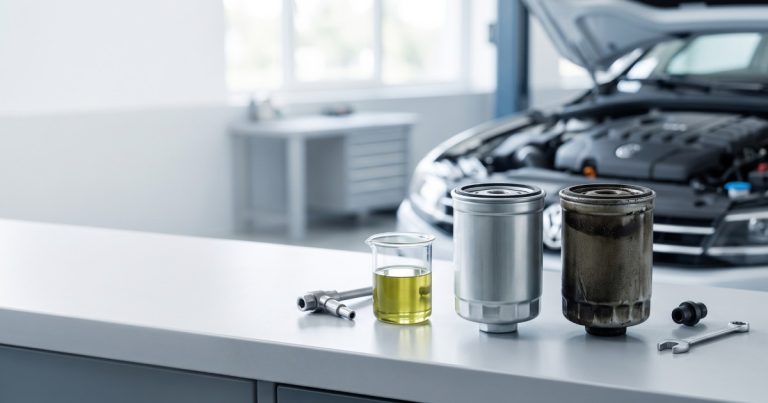
I once had a customer with a 2009 diesel pickup who tried flushing his fuel filter with diesel fuel and an air compressor rather than replacing it, hoping to stretch it another 10,000 miles. Within two weeks, he was back in the shop with a hard-start condition and reduced power. When we pulled the filter, it was still visibly clogged with fine sediment — the flushing had only cleared a small channel through the media, not the whole element. We replaced it properly, and the truck ran fine afterward.
Diesel Fuel Filters: A Different Kind of “Cleaning”
Diesel systems are a bit of a special case worth calling out separately, since diesel fuel filters often include a water separator bowl.
- These bowls are designed to be drained regularly — this is genuinely a form of in-place maintenance, but it’s draining water/sediment, not cleaning the filter media itself.
- Some diesel filter housings have a manual priming pump and drain valve specifically for this purpose.
- The filter element inside still needs full replacement at manufacturer-recommended intervals (typically every 10,000–15,000 miles, though this varies by vehicle).
Signs Your Fuel Filter Actually Needs Attention
Before you decide whether to clean or replace, confirm the filter is actually the problem. Common symptoms include:
- Engine hesitation or stumbling under acceleration
- Difficulty starting, especially after the vehicle has sat overnight
- Rough idle or stalling at low speeds
- Noticeable loss of power when climbing hills or towing
- Fuel pump running louder than usual (a sign it’s straining against restriction)
If you’re seeing two or more of these, it’s worth checking fuel pressure with a gauge before assuming the filter is the culprit — low fuel pressure can also point to a failing pump or a wiring issue.
Cleaning vs. Replacing: A Practical Comparison
| Factor | Cleaning In Place | Full Replacement |
|---|---|---|
| Cost | Free–$15 (cleaner/compressed air) | $15–$60 (filter), more for labor if inaccessible |
| Time | 15–30 minutes | 30–90 minutes depending on location |
| Effectiveness | Partial, temporary | Restores full flow capacity |
| Risk of injector damage | Higher (dislodged debris) | Low |
| Long-term reliability | Poor | Good |
| Recommended by manufacturers | Rarely | Standard practice |
Actionable Tips If You Want to Try In-Place Cleaning Anyway
If your situation calls for a stopgap — say, you’re diagnosing an issue and want to rule out a mild clog before committing to a full repair — here’s how to do it as safely as possible:
- Relieve fuel system pressure first. Use the fuel pump relay/fuse method or a pressure-relief valve on the fuel rail. Skipping this step is a common cause of fuel spray injuries.
- Work in a well-ventilated area, away from any ignition source. Fuel vapor is highly flammable.
- Use fuel-system-safe cleaner, not general solvents. Products labeled for fuel injection cleaning are formulated not to damage plastic components or seals.
- Flush in the direction of normal fuel flow when possible, not backward, to avoid pushing debris toward the engine.
- Inspect the filter housing for cracks or brittleness before reinstalling anything — a failed housing under pressure is a fire hazard.
- Treat this as diagnostic, not a permanent fix. Plan to replace the filter at your next scheduled maintenance regardless of how the cleaning goes.
Buyer’s Checklist: When to Just Replace the Filter
Skip cleaning entirely and replace the filter if:
- The vehicle has more than 60,000–80,000 miles since the last filter change
- You’re seeing hard starts combined with stalling
- The fuel filter is original equipment and its exact service history is unknown
- You’ve already tried in-place cleaning once with limited or no improvement
- The filter is inexpensive and easily accessible (most inline filters fall into this category)
Frequently Asked Questions
Can you clean a fuel filter without removing it from the vehicle? In limited cases, yes — mainly in-tank sock filters that can be backflushed through an access panel. Inline canister filters generally can’t be effectively cleaned without full removal, since their media is sealed inside a housing.
How often should a fuel filter be replaced instead of cleaned? Most manufacturers recommend replacement every 20,000–40,000 miles for gasoline vehicles and 10,000–15,000 miles for diesel filters, though this varies widely by model. Cleaning is not typically listed as a maintenance option in owner’s manuals.
Does cleaning a fuel filter with compressed air damage it? It can. High-pressure air can tear pleated paper media or push embedded debris further into the fuel system rather than out of it. If you use compressed air, keep pressure low and always flow in the original direction of fuel travel.
Is it safe to spray carb cleaner into a fuel filter? Only fuel-system-safe cleaners should be used, and only after the fuel system pressure has been relieved. General-purpose solvents can degrade seals and plastic housings not designed to handle them.
Will a dirty fuel filter throw a check engine light? Not directly in most cases, since filters aren’t monitored by sensors. However, the resulting lean fuel condition or low fuel pressure can trigger codes related to fuel trim or misfire detection.
Can a clogged fuel filter damage my fuel pump? Yes. A restricted filter forces the pump to work harder to maintain pressure, which generates excess heat and accelerates wear — often leading to premature pump failure if the filter issue isn’t addressed.
Final Takeaways
So, can you clean a fuel filter without removing it? In most real-world cases, the honest answer is no — not effectively. In-tank sock filters offer some limited flexibility for in-place backflushing, but inline filters are sealed units that need to come out to be properly cleaned or, more realistically, replaced.
Given how inexpensive most fuel filters are compared to the cost of a damaged fuel pump or clogged injectors, replacement is almost always the smarter long-term move. If you’re troubleshooting a fuel delivery issue right now, use in-place cleaning only as a diagnostic step — then plan to swap the filter properly as soon as you can.
If you’re not sure which type of fuel filter your vehicle has or where it’s located, check your owner’s manual or a repair guide specific to your make and model before starting any fuel system work.