Which Way Does a Fuel Filter Go? A Mechanic’s Guide to Getting It Right the First Time
If you’ve ever held a new fuel filter in one hand and stared at your fuel line in the other, wondering which end faces the tank and which faces the engine, you’re not alone. It’s one of the most common questions DIYers ask before a filter swap — and it’s also one of the easiest mistakes to make with real consequences.
Get it backward, and you’re not just wasting a part. A reversed fuel filter can starve your engine of fuel, trigger check engine lights, or force fuel through the filter’s structural end cap instead of its media, leading to debris bypassing filtration entirely. After a decade of pulling old filters out of driveways and shop bays, I can tell you this: the fix takes ten seconds once you know what to look for.
This guide walks through exactly which way does the fuel filter go, why direction matters, and how to double-check your work before you ever turn the key.
Why Fuel Filter Direction Actually Matters
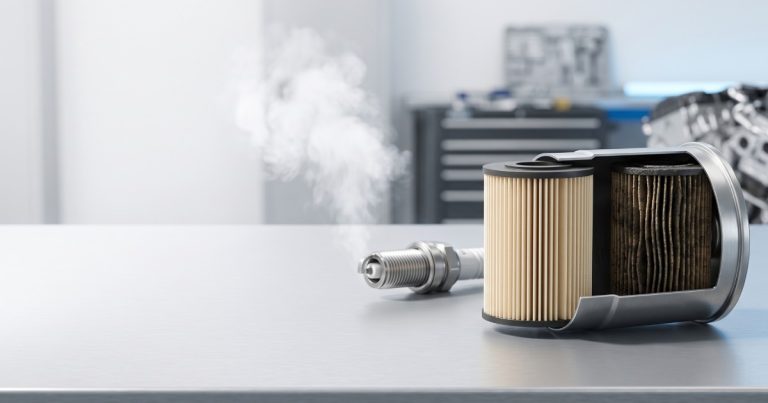
A fuel filter isn’t a symmetrical part, even when it looks like one. Inside that metal or plastic canister is a pleated filter media designed to trap contaminants as fuel flows in one specific direction — from the fuel tank toward the engine.
Here’s what happens if you install it backward:
- Filtration gets compromised. Some filter designs rely on the shape of the internal media and end caps to force fuel through the filtering surface. Reverse the flow, and fuel can bypass the media or dislodge trapped debris back into the line.
- Fuel pressure drops. Many filters have an internal check valve or a flow-optimized housing. Backward installation restricts flow more than intended, which can cause hesitation, stalling, or hard starts.
- You risk pump damage. The fuel pump has to work harder to push fuel through a filter installed against its intended flow path, which shortens pump life over time.
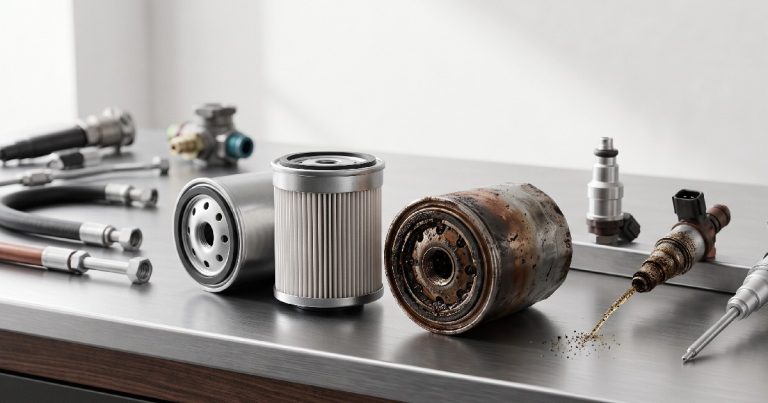
- Contamination reaches injectors. In the worst case, a backward filter lets larger particles through, which end up clogging fuel injectors — a far more expensive repair than a filter.
None of this is theoretical. It’s the reason “which way does fuel filter go” is searched thousands of times a month — people find out the hard way, then go looking for the fix.
The Flow Arrow: Your Fastest Answer
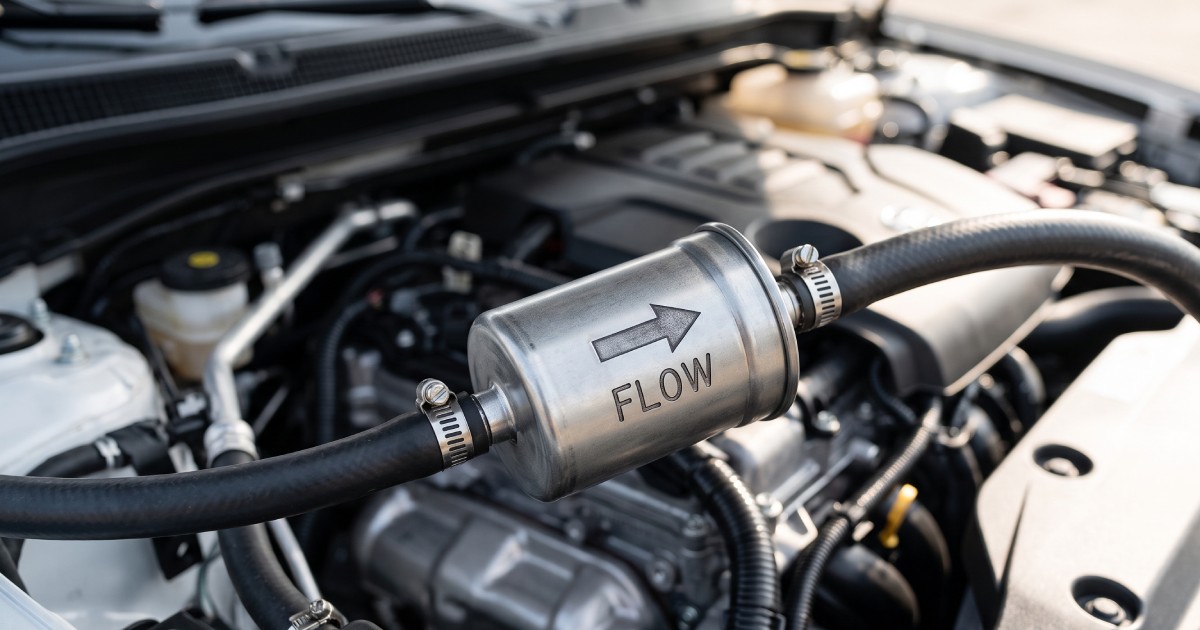
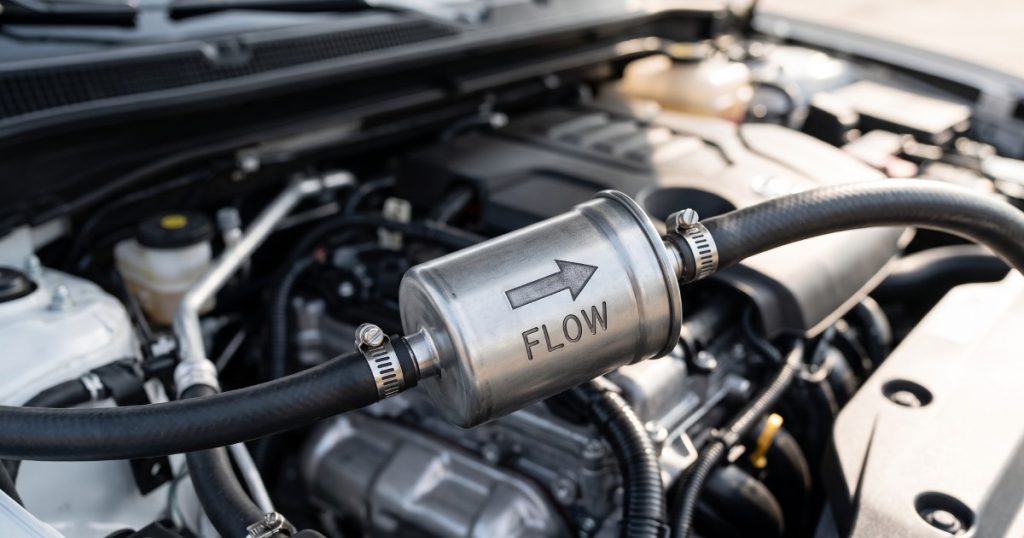
Every fuel filter — inline, canister, or spin-on — is manufactured with a flow direction arrow stamped, embossed, or printed on the housing. This is the single most reliable way to answer the question.
Here’s the rule: the arrow points in the direction fuel should travel — from the tank side to the engine side.
How to Find the Arrow
- Look on the flat side of a canister-style filter body.
- On inline plastic filters, check along the length of the housing near the middle.
- On metal spin-on filters, the arrow is often stamped near the outlet threads.
- If the arrow is worn or hard to see, wipe the housing with a shop rag or shine a flashlight at a low angle — stamped arrows show up better with side lighting.
If you genuinely cannot find an arrow (rare, but it happens on older or off-brand filters), move to the backup methods below.
No Visible Arrow? Use These Backup Methods
1. Compare Fitting Sizes
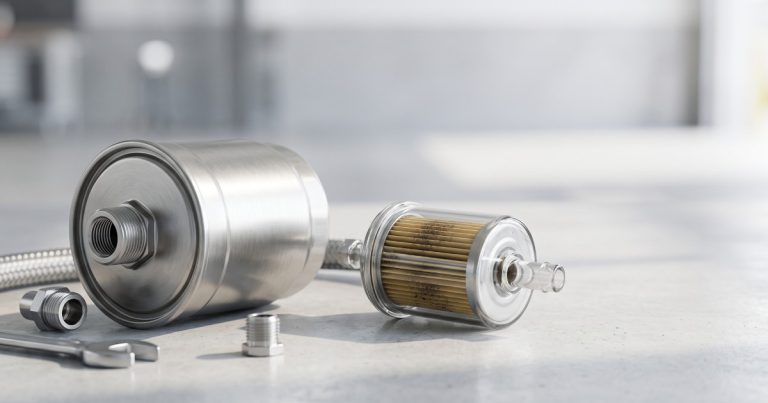
Many fuel filters have a larger inlet and a smaller outlet, or different fitting styles on each end (one push-connect, one threaded). Match each end to the corresponding fitting on your vehicle’s fuel line — the inlet side connects to the line coming from the tank, and the outlet connects to the line heading toward the engine or fuel rail.
2. Trace Your Fuel Lines
Before removing the old filter, take a photo or mentally trace the lines:
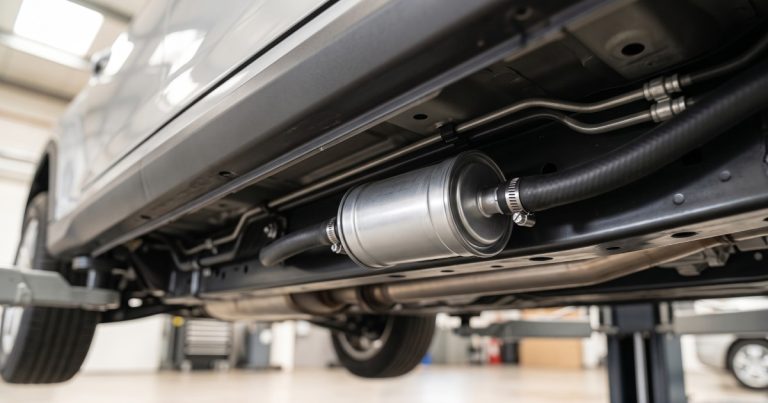
- The line from the fuel tank (often running along the frame rail) connects to the filter’s inlet.
- The line toward the engine bay connects to the filter’s outlet.
This is also the safest way to confirm orientation on vehicles where the old filter’s arrow has worn off — the old filter is already installed correctly, so its orientation tells you everything you need.
3. Check the Manufacturer’s Part Diagram
Fuel filter manufacturers (Bosch, Fram, Wix, Motorcraft, ACDelco) publish install diagrams for nearly every filter part number. A 30-second search of your filter’s part number plus “installation diagram” will usually confirm orientation if you’re still unsure.
Step-by-Step: Installing a Fuel Filter the Right Way
Whether you’re working on a carbureted classic or a fuel-injected daily driver, the core process is similar. Here’s the sequence I use on every filter job:
- Relieve fuel system pressure. Locate the fuel pump relay or Schrader valve and depressurize the system per your vehicle’s service manual. Skipping this step is the #1 cause of fuel spray injuries during filter changes.
- Locate the old filter — usually along the frame rail, near the fuel tank, or in the engine bay depending on the vehicle.
- Note the orientation before removal. Snap a photo. This single habit prevents 90% of “which way does the fuel filter go” confusion.
- Clamp or plug the lines to catch residual fuel and prevent spills.
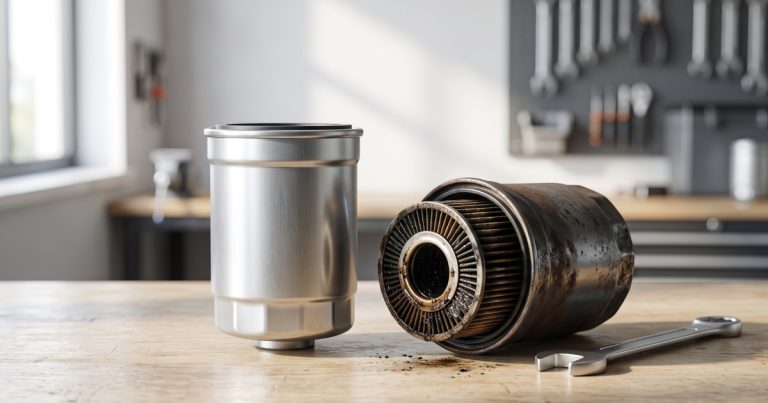
- Remove the old filter and compare it side-by-side with the new one to confirm they’re the same design and flow direction.
- Install the new filter with the arrow pointing toward the engine (fuel flow direction), matching the orientation you photographed.
- Secure fittings and clamps to manufacturer torque or clamp-tightness specs.
- Prime the system by cycling the ignition (without starting) two or three times to build fuel pressure, or use the pump relay’s test procedure.
- Check for leaks at both fittings before starting the engine.
- Start the engine and monitor for hesitation, stalling, or warning lights — a correctly installed filter should produce no drivability symptoms.
Quick Pre-Install Checklist
- Fuel system pressure relieved
- Old filter orientation documented (photo or notes)
- New filter matches old filter’s design and size
- Flow arrow confirmed and pointed toward the engine
- Fittings/clamps torqued or seated properly
- No visible leaks after priming
- No warning lights or drivability issues on startup
Common Mistakes DIYers Make
- Assuming symmetry. Even filters that look identical on both ends usually aren’t — internal media orientation matters even if the housing looks the same from outside.
- Reusing old clamps on push-connect fittings. Worn clamps can leak regardless of filter orientation, and it’s often mistaken for a “backward filter” symptom.
- Ignoring the old filter’s orientation. The single fastest confirmation method is also the most skipped step. Always check before you pull the old one.
- Forcing a filter that doesn’t fit. If a filter doesn’t seat naturally, it’s often the wrong part number — not a orientation issue. Double-check compatibility rather than forcing it.
Signs You Installed the Fuel Filter Backward
If you’ve already completed the swap and something feels off, watch for:
- Engine cranks but takes longer than normal to start
- Noticeable power loss or hesitation under acceleration
- Stalling at idle or under load
- Check engine light with fuel trim or pressure-related codes
- Fuel pump running louder or more frequently than before
If you notice any of these after a filter change, the first thing to check — before diagnosing anything else — is whether the flow arrow points toward the engine.
FAQ: Which Way Does a Fuel Filter Go
Q: Which way does the fuel filter go — toward the tank or the engine? The arrow on the filter housing should point toward the engine. Fuel flows from the tank, through the filter, and on to the engine or fuel rail.
Q: What happens if I install a fuel filter backward? You may experience reduced fuel flow, poor filtration, hard starting, stalling, or long-term damage to the fuel pump and injectors from unfiltered debris.
Q: My fuel filter has no visible arrow. How do I know which way it goes? Compare fitting sizes and styles to your fuel lines, trace which line comes from the tank versus the engine, or check the manufacturer’s installation diagram using the part number.
Q: Is fuel filter direction the same for carbureted and fuel-injected engines? Yes — the principle is identical. Fuel always flows from the tank side to the engine side, regardless of whether the engine is carbureted or fuel injected.
Q: Can a backward fuel filter damage my engine? It won’t damage the engine directly, but it can starve it of fuel pressure and allow contaminants through, which over time can damage the fuel pump and injectors.
Q: How often should I check fuel filter orientation? Every time you replace it. Even if you’ve done it before, confirming orientation takes seconds and prevents avoidable comebacks or drivability issues.
Key Takeaways
- The flow arrow on the filter housing is the definitive answer to which way does fuel filter go — it should always point toward the engine.
- No arrow visible? Trace your fuel lines or compare fitting styles to the old filter before removal.
- Photographing the old filter’s orientation before you touch anything is the single best habit for a clean, correct install.
- A backward filter causes real symptoms: hesitation, stalling, poor filtration, and long-term wear on your fuel pump and injectors.
Getting fuel filter direction right isn’t complicated once you know where to look — it just takes a careful eye and a few extra seconds before you tighten that last clamp. Next time you’re staring at a new filter in one hand and your fuel line in the other, you’ll know exactly which way it goes.