Where Is the Fuel Filter Located? A Mechanic’s Guide to Finding It Fast
If you’ve ever popped the hood expecting to find your fuel filter sitting right there next to the air filter, you’re not alone — and you’re also about to be a little disappointed. One of the most common questions DIYers ask when a car starts sputtering, stalling, or losing power is simple: where fuel filter is located on their specific vehicle. The frustrating answer is: it depends. Unlike the air filter or oil filter, which almost always live in predictable spots under the hood, the fuel filter has a habit of hiding in places most owners never think to look.
After spending over a decade working on everything from daily-driver sedans to high-mileage trucks, I’ve crawled under more vehicles chasing a fuel filter than I can count. In this guide, I’ll walk you through exactly where fuel filter is located across different vehicle types, how to identify yours, and what to know before you attempt a replacement.
Why Fuel Filter Location Isn’t Standardized
Unlike many engine components, fuel filters don’t have one universal mounting location because fuel delivery systems themselves have changed dramatically over the decades. Automakers have shifted from carbureted engines to fuel-injected systems, and from external filters to filters integrated directly into the fuel tank. This evolution is exactly why the question “fuel filter where is it located” doesn’t have a single, one-size-fits-all answer.
Three major factors determine where your fuel filter sits:
- Vehicle age and fuel system type (carbureted vs. fuel-injected)
- Manufacturer design philosophy (external, in-line filter vs. integrated in-tank filter)
- Vehicle layout (engine placement, frame design, and available space)
Understanding these factors helps explain why your neighbor’s truck has an easy-to-reach filter under the hood, while your sedan’s filter might be bolted to the frame rail underneath the car — or sitting inside the gas tank entirely.
The Most Common Fuel Filter Locations
1. Along the Frame Rail (Underneath the Vehicle)
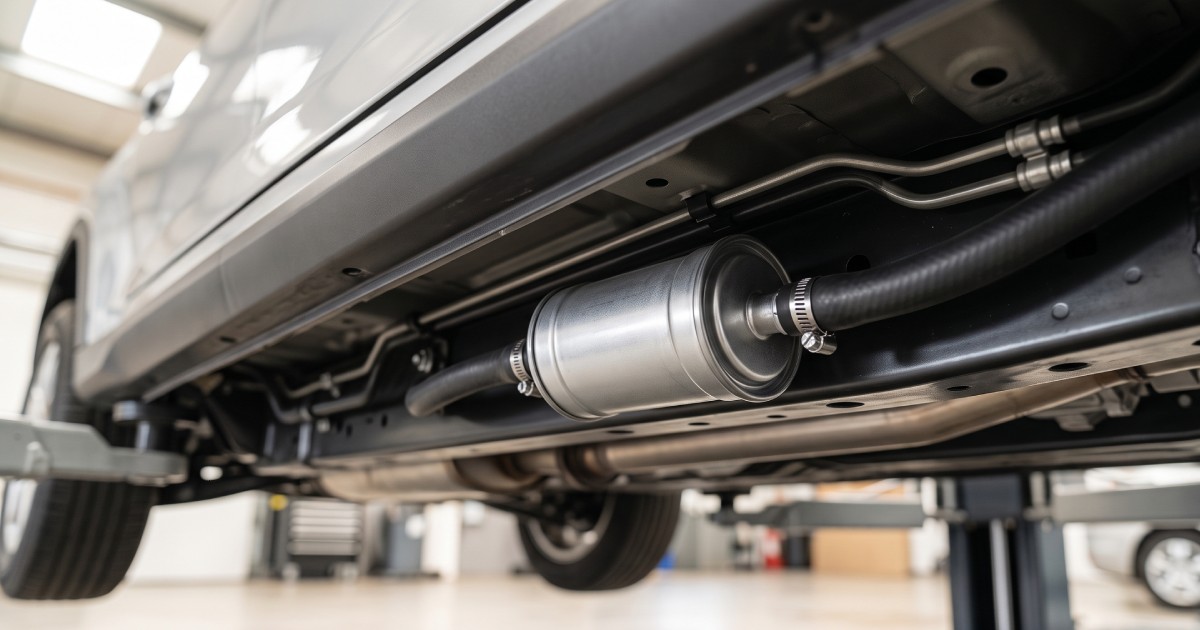
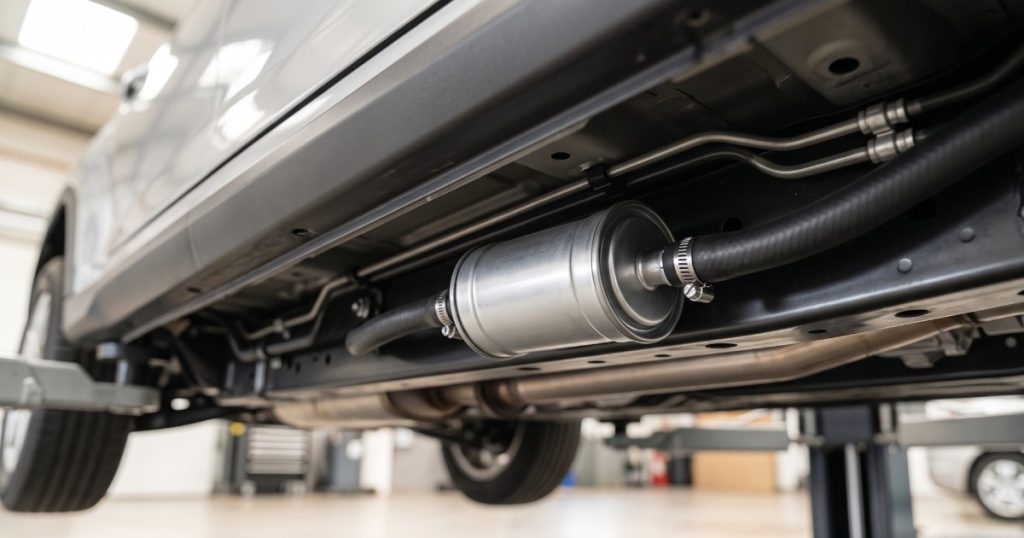
On many older and mid-2000s vehicles, especially trucks and rear-wheel-drive cars, the fuel filter is mounted along the frame rail, roughly between the fuel tank and the engine. This is arguably the most classic answer to “where is the fuel filter” for vehicles built before manufacturers started integrating filters into the fuel pump assembly.
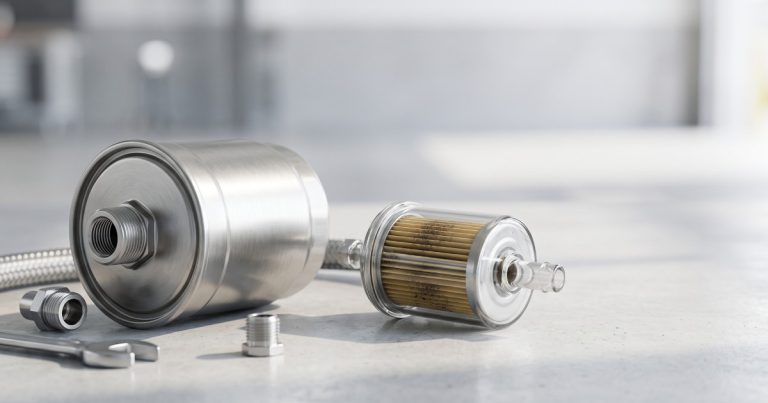
How to spot it: Get the vehicle safely on ramps or jack stands, look along the driver’s side or passenger’s side frame rail, and trace the metal fuel line running from the tank toward the engine bay. The filter is typically a small cylindrical canister clipped or bracketed to the frame.
2. Under the Hood, Near the Engine or Firewall
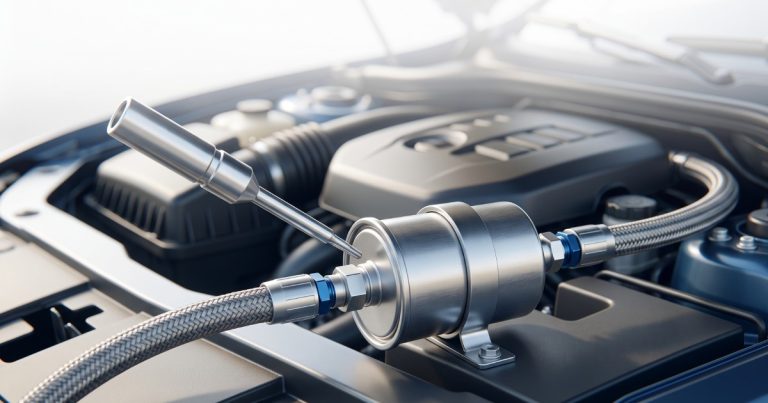
Many carbureted vehicles and older fuel-injected engines house the filter in the engine bay — sometimes near the carburetor, sometimes closer to the firewall along the fuel line. This location answers the common search “where to install fuel filter” for classic car restorations and older trucks, since it’s the most accessible spot for regular maintenance.
How to spot it: Follow the fuel line from where it enters the engine bay. You’re looking for an inline canister, often with visible fuel line clamps on either end.
3. Inside the Fuel Tank (Integrated with the Fuel Pump)
This is where things get interesting — and where a lot of confusion comes from. On the majority of modern vehicles built after the late 1990s and into the 2000s and beyond, the fuel filter isn’t a separate component at all. Instead, it’s built directly into the fuel pump assembly, which sits inside the fuel tank.
This directly answers two of the most searched questions on this topic: is the fuel filter in the fuel pump, and is the fuel filter inside the fuel pump. For the vast majority of modern cars, the answer is yes. Manufacturers moved the filter inside the tank for a few practical reasons:
- Reduced exposure to road debris, moisture, and corrosion
- Simplified fuel line routing with fewer connection points that could leak
- Longer filter lifespan, since in-tank filters are constantly bathed in fuel rather than exposed to temperature swings
If your vehicle falls into this category, replacing the filter usually means removing the fuel pump assembly, which sits under an access panel beneath the rear seat or trunk floor on many sedans, or requires dropping the fuel tank on trucks and SUVs without an access panel.
How to Determine Which Type Your Vehicle Has
Rather than guessing, here’s the most reliable way to figure out where fuel filter is located on your specific make and model:
- Check your owner’s manual first. Most manuals specify whether the filter is serviceable and, if so, its general location.
- Search your VIN-specific repair database or forum. Enthusiast forums for your exact model year are goldmines for this kind of detail.
- Look for a visible inline filter along the fuel line. If you can’t find one under the hood or frame rail, it’s very likely integrated into the in-tank fuel pump module.
- Ask a parts store to look up your vehicle. If a standalone fuel filter part number comes up for your exact trim and engine, you have an external filter. If nothing comes up, it’s almost certainly integrated.
Where to Install Fuel Filter Replacements Safely
Once you’ve located your fuel filter, installation technique matters just as much as location. Here’s what I always tell DIYers before they start:
- Relieve fuel system pressure first. Pull the fuel pump fuse, start the engine until it stalls, then disconnect the battery. Skipping this step is the single most common cause of fuel spraying out unexpectedly during a filter swap.
- Note the flow direction. Nearly every inline filter has an arrow indicating fuel flow direction. Installing it backward restricts fuel delivery and can cause hard starts or stalling.
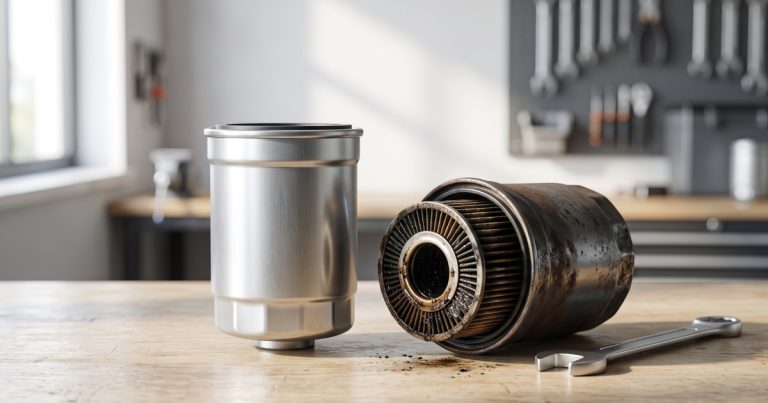
- Use new clamps or quick-connect fittings, not the old, fatigued ones. Reused clamps are a leading cause of post-repair fuel leaks.
- Have a rag and a small drain pan ready. Even with pressure relieved, some residual fuel will spill when you disconnect the lines.
- Torque fittings to spec, especially on vehicles with threaded connections rather than clip-style quick connects.
If your filter is integrated into the fuel pump module, this isn’t a job to improvise. It typically requires dropping the tank or accessing it through a seat panel, disconnecting electrical connectors, and carefully resealing the pump assembly to prevent leaks and check-engine-light triggers afterward.
Signs Your Fuel Filter Needs Attention
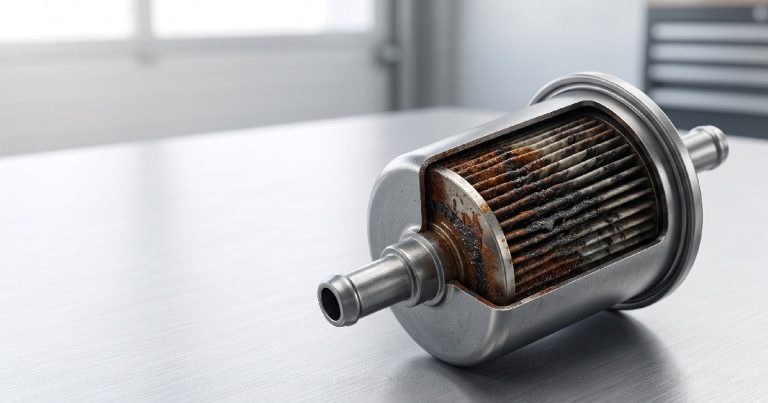
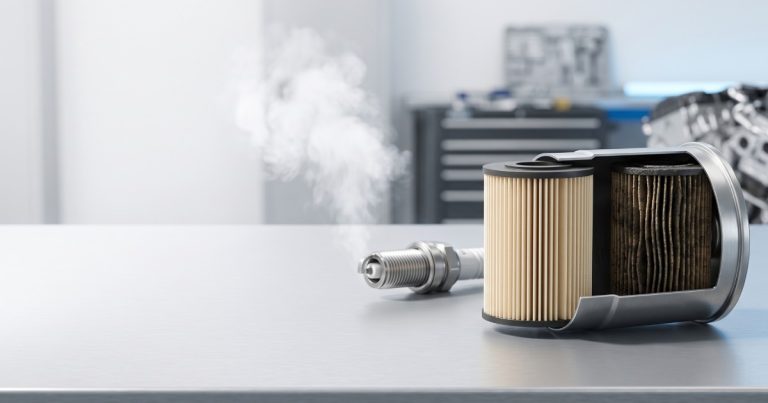
Regardless of where your fuel filter is located, the symptoms of a clogged or failing one are fairly consistent:
- Engine hesitation or stumbling under acceleration
- Difficulty starting, especially after the vehicle has sat for a while
- Random stalling at idle or low speeds
- Reduced fuel economy
- Engine sputtering at highway speeds under load
I’ve seen owners chase ignition problems, throttle body issues, and even transmission concerns for weeks before realizing a clogged fuel filter was the actual culprit. If you’re experiencing a combination of these symptoms, checking the fuel filter should be near the top of your diagnostic checklist.
Quick Reference Checklist: Finding Your Fuel Filter
- Check the owner’s manual for filter type and location
- Inspect the frame rail between the tank and engine
- Check under the hood near the firewall or carburetor
- Confirm whether the filter is integrated into the fuel pump module
- Cross-reference with a parts store lookup by VIN
- Search model-specific forums for confirmation photos
Frequently Asked Questions
Where fuel filter is located on most modern cars? On most vehicles made after the late 1990s, the fuel filter is located inside the fuel tank, integrated directly into the fuel pump assembly. Older vehicles are more likely to have an external, inline filter along the frame rail or under the hood.
Is the fuel filter in the fuel pump? On many modern vehicles, yes. Automakers began combining the fuel filter and fuel pump into a single module to reduce leak points and improve durability, meaning the filter can’t be serviced separately from the pump.
Is the fuel filter inside the fuel pump on every car? Not every car. Many older vehicles, diesel trucks, and some current models still use a standalone, external fuel filter that can be replaced independently of the fuel pump.
Where to install fuel filter replacements on an inline system? Inline filters should be installed in the same orientation as the original — matching the flow-direction arrow — and placed between the fuel tank and the engine, using new clamps or fittings at each connection point.
Fuel filter where is it located if I can’t find one under the hood? If there’s no visible canister under the hood or along the frame rail, your vehicle almost certainly has an in-tank filter built into the fuel pump module, accessible through the tank or a seat/trunk access panel.
How often should the fuel filter be replaced? For vehicles with a serviceable external filter, most manufacturers recommend replacement every 20,000–40,000 miles. In-tank filters integrated with the fuel pump are typically designed to last the life of the pump itself.
Key Takeaways
Finding where fuel filter is located comes down to understanding your vehicle’s fuel system design: older and carbureted vehicles typically use an external filter along the frame rail or under the hood, while most modern vehicles integrate the filter directly into the in-tank fuel pump module. Before attempting a DIY replacement, confirm your exact setup using your owner’s manual, a VIN lookup, or a trusted parts database — and always relieve fuel system pressure before disconnecting any lines.
If you’re dealing with stalling, hesitation, or rough idling and suspect a clogged filter, don’t guess — verify your fuel filter’s location and condition before replacing other components unnecessarily. A little diagnostic patience now can save you a lot of wasted parts money later.