How to Reset Fuel Filter Warning Light (Step-by-Step Guide)
If your dashboard just lit up with a wrench, filter, or “Change Fuel Filter” icon, you’re probably wondering two things: is my truck about to strand me, and how do I reset fuel filter warning light without paying a shop $150 just to clear a code? You’re not alone — this is one of the most common alerts on diesel pickups and older diesel-equipped SUVs, and the good news is that in most cases you can reset it yourself in under ten minutes, provided the maintenance has actually been done.
This guide covers exactly how to reset fuel filter warning light indicators across the most common platforms, why the light comes on in the first place, and — just as important — when resetting it without changing the filter is a bad idea that can lead to injector damage or a stalled engine on the highway.
Why Is My Fuel Filter Light On?
The fuel filter warning light isn’t random. It’s almost always tied to one of three triggers, depending on your vehicle:
- A mileage-based service interval stored in the engine control module (ECM), which flips the light on regardless of actual filter condition once you hit a set distance (common on Ford Power Stroke and Ram Cummins trucks).
- A water-in-fuel (WIF) sensor built into the filter housing, which detects water accumulation and triggers the light — extremely common on diesel engines, since diesel fuel filters double as water separators.
- A restriction sensor that measures fuel pressure drop across the filter element and flags the light when the filter is physically clogging and starving the engine of fuel.
Gasoline vehicles rarely have a dedicated fuel filter light because most modern gas filters are integrated into the in-tank fuel pump module and aren’t considered a scheduled maintenance item. If you’re seeing this light, there’s a very good chance you’re driving a diesel truck, an older direct-injection gas vehicle with a canister-style filter, or a vehicle with an aftermarket fuel-water separator installed.
What the Fuel Filter Actually Does (And Why the Light Matters)
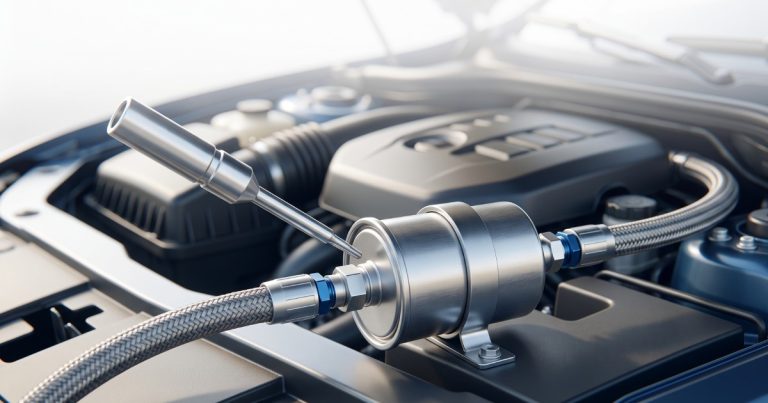
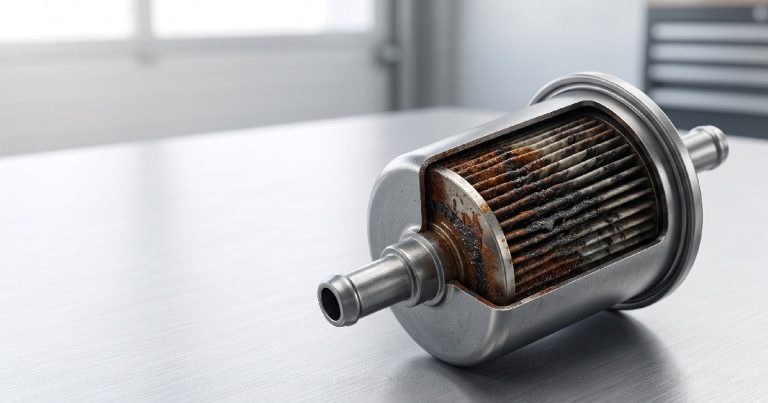
Think of your fuel filter as the last line of defense between the fuel tank and your injectors. Modern diesel injectors operate with clearances measured in microns — often finer than the width of a human hair — so even small amounts of debris, rust, or water can cause catastrophic, expensive damage.
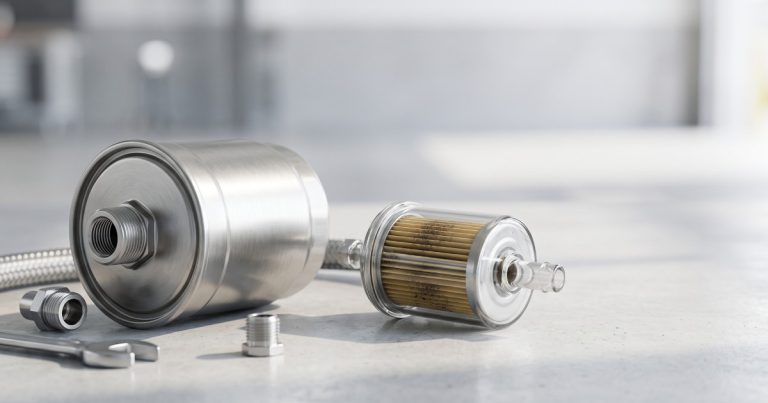
- Paper element filters trap particulate down to roughly 2–10 microns depending on the application, and are the most common type in both gas and diesel systems.
- Mesh screen filters, often used as a pre-filter or sock filter inside the fuel tank, catch larger debris before fuel reaches the finer paper element.
- Spin-on cartridge filters, common on diesel trucks (like the Fuel Pro or FASS systems), combine filtration with a built-in water separator bowl.
When that filter starts clogging, fuel flow to the injection pump drops, and the ECM notices the pressure differential — which is exactly what triggers a real (non-mileage-based) warning light.
Signs of a Clogged or Failing Fuel Filter
Before you reset anything, it’s worth confirming whether your symptoms match a genuinely dirty filter:
- Hard starting or extended cranking, especially after the vehicle sits overnight
- Loss of power under acceleration or towing load, as the engine can’t pull enough fuel through a restricted filter
- Engine stalling at idle or under load, particularly on diesels with severe restriction
- Rough idle or hesitation that worsens as the tank gets low (sediment gets stirred up)
- Reduced fuel economy as the engine compensates for inconsistent fuel delivery
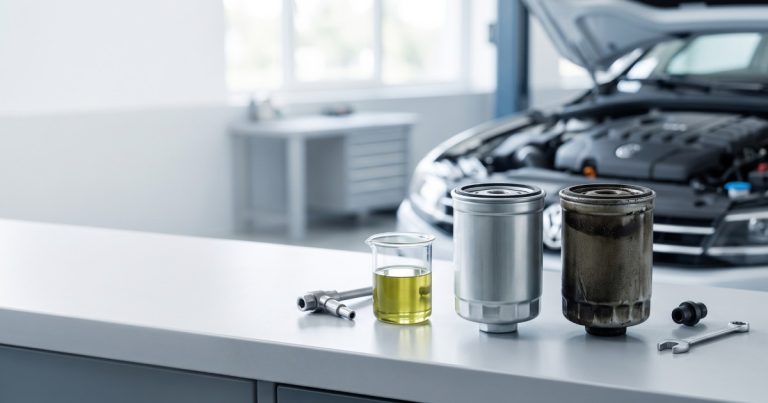
- Visible fuel or water in the clear bowl on diesel filter/water separator housings
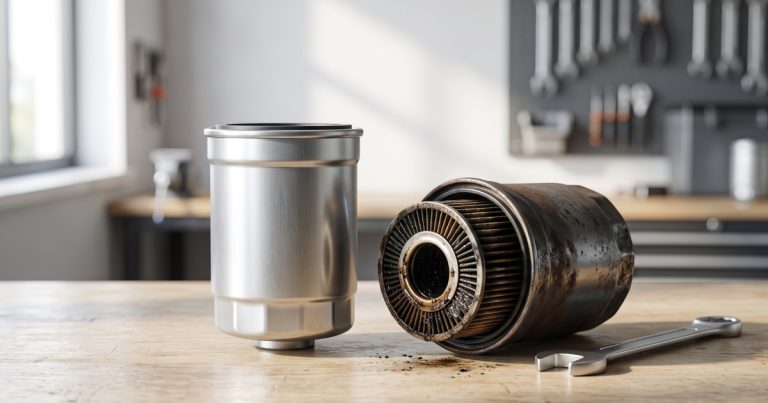
If you’re experiencing any of the symptoms above, don’t just reset the light — replace the filter first. Clearing the code on a genuinely restricted filter treats the symptom, not the problem, and can lead to fuel pump or injector failure down the line.
How to Reset Fuel Filter Warning Light: General Methods
There are four common ways to reset fuel filter warning light indicators, and which one works depends entirely on your vehicle’s electronics.
Method 1: Ignition Cycle Reset (Most Common)
Many vehicles use a simple key-cycle reset after the filter has been physically replaced:
- Turn the ignition to the “ON” position (engine off) — do not start the engine yet.
- Fully press the accelerator pedal to the floor 3 times within about 10 seconds.
- Turn the ignition off, then start the engine normally.
- The light should clear on the next drive cycle.
This method is common on many Ford diesel trucks and some GM/Duramax models, though exact pedal-press counts and timing vary by model year — always verify with your owner’s manual before assuming this sequence applies.
Method 2: Dashboard Button Combo Reset
Many trucks and SUVs use a hold-and-release combination on the instrument cluster:
- Turn the key to “ON” without starting the engine.
- Press and hold the trip odometer reset button (or the “OK/SET” button on newer clusters).
- While holding, turn the key to “START” and let the engine run.
- Continue holding the button for 15–20 seconds until “Filter Reset” or similar text appears, then release.
This is the standard method on many Ram/Cummins trucks and some Ford Super Duty models with digital driver information centers.
Method 3: OBD-II Scan Tool Reset
If your vehicle doesn’t have a manual reset sequence — or if the pedal/button method isn’t clearing the light — an OBD-II scan tool is the most reliable option:
- Plug a code reader or diagnostic scanner into the OBD-II port (usually under the dash, driver’s side).
- Navigate to “Maintenance Reset” or “Service Reset” functions.
- Select “Fuel Filter Reset” from the menu (some tools list it under generic “Oil/Filter Service Reset”).
- Confirm and cycle the ignition.
Basic code readers under $50 often lack manufacturer-specific reset menus, so a mid-range scanner with bi-directional or manufacturer-specific software works more reliably for this task.
Method 4: Disconnect the Battery (Last Resort)
Disconnecting the negative battery terminal for 10–15 minutes can clear the light by resetting the ECM’s stored codes, but this also wipes other learned values (idle trim, radio presets, sometimes transmission adaptive learning). Use this only if the manufacturer-specific methods above don’t work, and be aware the light may return if the underlying restriction sensor is still triggered.
Quick Tip: If none of these methods clear the light, the sensor itself — not just the maintenance counter — may still be detecting a problem. Don’t keep resetting it repeatedly; investigate the actual filter condition.
Replacement Intervals by Vehicle Type
| Vehicle Type | Typical Interval |
|---|---|
| Diesel pickup trucks (Ford, Ram, GM) | 15,000–20,000 miles or 1 year |
| Diesel SUVs/vans | 15,000–20,000 miles |
| Gasoline vehicles (external filter) | 30,000–50,000 miles |
| Gasoline vehicles (in-tank filter) | Often “lifetime” — rarely serviced separately |
| Fleet/commercial diesel | Every oil change interval (severe duty) |
Always defer to your specific make and model’s maintenance schedule in the owner’s manual — towing, cold climates, and biodiesel blends can shorten these intervals significantly.
How to Replace a Fuel Filter (Step-by-Step)
If your filter is actually due, here’s the general process. Steps vary by vehicle, so cross-reference with a repair manual for your specific engine.
Tools needed:
- Fuel filter wrench or strap wrench (for spin-on types)
- Drain pan
- Shop rags/absorbent pads
- Replacement filter and new O-rings/seals
- Safety glasses and nitrile gloves
Steps:
- Relieve fuel system pressure. On gasoline systems, this usually means pulling the fuel pump fuse and running the engine until it stalls. Diesel systems typically don’t require this but should still be depressurized per the service manual.
- Locate the filter. Check under the vehicle along the frame rail (inline), near the fuel tank (in-tank), or in the engine bay (canister/spin-on diesel filters).
- Position a drain pan beneath the filter housing to catch residual fuel.
- Disconnect fuel lines or unscrew the cartridge, depending on filter type. Note the fuel flow direction arrow before removal.
- Install the new filter, replacing O-rings and seals as needed. Pre-fill diesel cartridge filters with clean fuel where possible to reduce air in the system.
- Prime the fuel system — many diesels have a manual priming pump; some require several cranking cycles.
- Check for leaks before closing everything up and taking it for a test drive.
- Perform the warning light reset using the method appropriate to your vehicle (see above).
Safety Warnings
- Fuel is flammable — work away from open flames, sparks, and running engines.
- Always relieve system pressure before disconnecting lines; pressurized fuel can spray under significant force.
- Dispose of the old filter and any fuel-soaked rags per local hazardous waste regulations — never in household trash.
- Wear eye protection; fuel contact with eyes requires immediate flushing and medical attention.
OEM vs. Aftermarket Filters
| Factor | OEM Filter | Aftermarket Filter |
|---|---|---|
| Fit/Compatibility | Guaranteed | Usually good, verify part number |
| Micron Rating | Matches factory spec | Varies by brand — some exceed OEM spec |
| Cost | Higher | Often 20–40% cheaper |
| Water Separation (diesel) | Reliable | Varies — stick to reputable brands (Fleetguard, WIX, Baldwin, Mopar) |
For diesel trucks especially, sticking with reputable filtration brands matters more than chasing the lowest price — injector replacement costs far exceed any savings from a bargain filter.
DIY vs. Professional Replacement
- DIY typically costs $20–$60 in parts and takes 20–45 minutes for accessible inline or under-hood filters.
- Professional replacement runs $80–$200 depending on labor rates and filter accessibility, with in-tank filters on the higher end due to tank drop labor.
- Choose professional service if the filter is integrated into the fuel pump module (common on many gasoline vehicles), as this often requires tank removal and specialized tools.
Maintenance Checklist
- Confirm the light is filter-related, not a different fuel system code (scan for stored DTCs first)
- Check filter housing for visible water or debris before deciding to reset only
- Replace the filter if due by mileage or symptoms present
- Use manufacturer-correct reset procedure
- Log the reset date/mileage for future reference
- Recheck after 100–200 miles to confirm the light doesn’t return
Frequently Asked Questions
How do I reset my fuel filter light without a scan tool? Most vehicles support a manual reset using the ignition key cycle or dashboard button combo described above — no scan tool required, though it varies by make and model.
How to remove fuel filter warning light permanently if it keeps coming back? A light that returns after a reset usually means the underlying restriction or water-in-fuel sensor is still triggered — the filter likely needs to be physically replaced rather than just reset.
Can I reset the fuel filter light without changing the filter? Yes, mechanically it’s possible on most vehicles, but doing so only clears the counter — it doesn’t fix restricted fuel flow, and ignoring a genuinely clogged filter risks injector or fuel pump damage.
Why is my fuel filter light on right after I replaced the filter? This usually means the reset procedure wasn’t completed correctly, or in rare cases, an issue with the new filter installation (air in the lines, incorrect seating) is still triggering the restriction sensor.
Is the fuel filter light the same as the check engine light? No — the fuel filter light is a maintenance reminder or sensor-triggered alert, while the check engine light indicates a broader range of stored diagnostic trouble codes that require a scan tool to read.
Does every diesel truck have a fuel filter warning light? Most modern diesel pickups (Ford Power Stroke, Ram Cummins, GM Duramax) include this feature due to the water-separator function of their filters, but exact implementation varies by model year.